Case study 02
Powernaut
I narrowed a company chasing every market to the one it could win.
I joined Powernaut on a three-day-a-week UX contract and within a month I was running the product function and advising on a business pivot. Embedded new ways of working that deliver real customer value and led the strategy the investors backed.
What I built
- A 26-interview research programme across nine countries that produced the company's new direction
- The product strategy, one shape the whole business works from
- An operating model where one merged team ships customer-visible value every cycle
- An AI-native design system that holds quality without a designer in every cycle
- Three missing platform insight layers, shipped, one now a selling point in live demos
The way in
The job was delivery capacity. The role it turned into did not exist before I arrived.
I came in to take design work off a team that had too much of it. There was no product team and no plan for one. Within a couple of weeks they asked me to go to five days. A few weeks after that we agreed an equity share, and I took on design and product.
The questions that mattered, what we should build and why, had no owner, so I started answering them. A few months in the founder handed the rest over, and I have run product since.
The first product call
Five customers, two directions, one small team. My first call was where to focus our efforts.
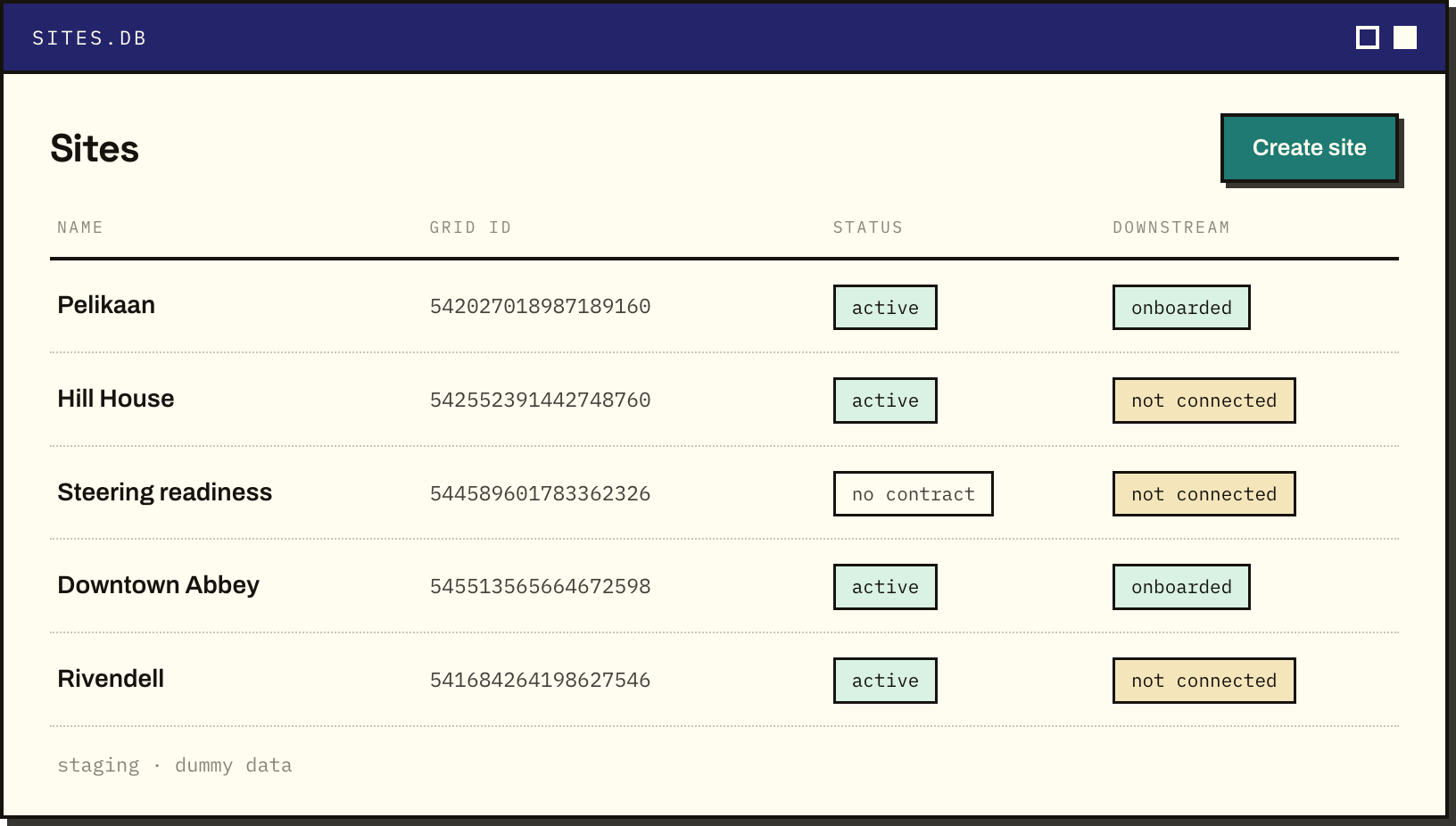
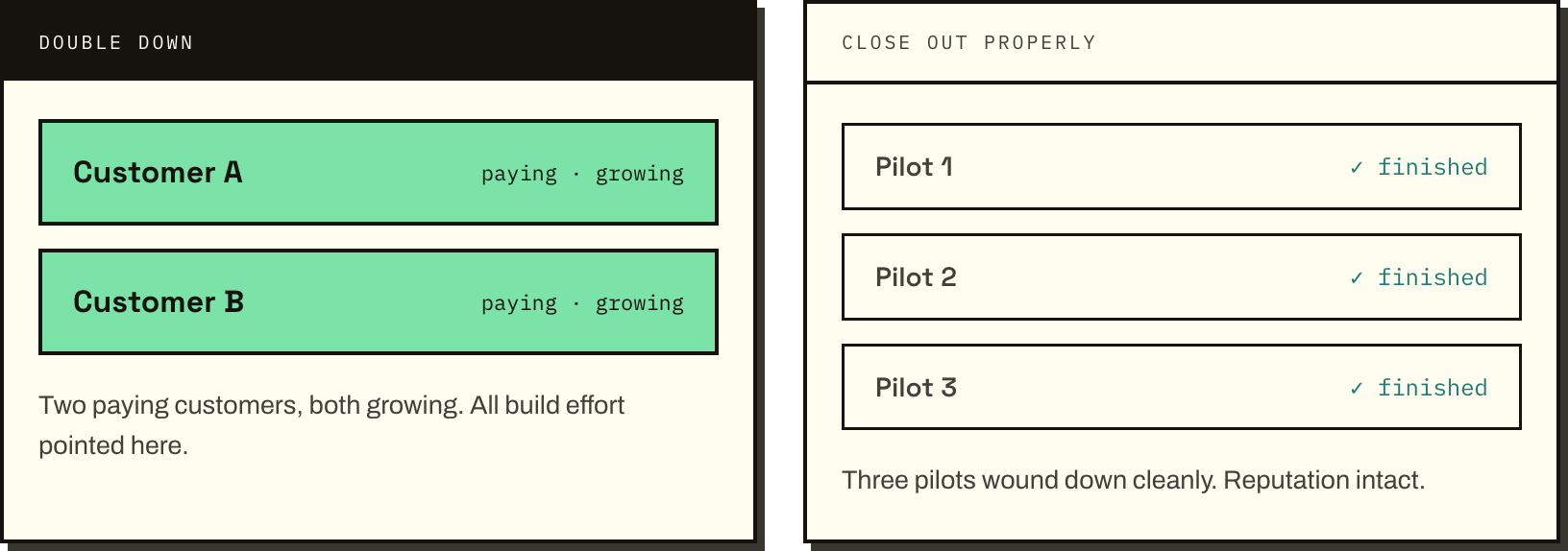
The team were drowning in work and fighting on multiple fronts. Two of our customers were paying and growing. The other three were pilots, asking for features we had no realistic way of building, with no promise of ever turning into rollouts. With the team we had we could not serve both.
The numbers said the same thing about the pilots. Fewer than one in fifty of the end customers we needed were signing up, fewer than half the sites were profitable, customer service was killing us, and the rollout target the work was meant to unlock was out of reach.
So I chose. We doubled down on the two that were pulling us forward and finished the other three's pilots properly, final reports, forecast against realised savings and happy customers. We left that market with our reputation and relationships intact. It allowed a stretched team to focus on the one place we had traction, and it set up everything that followed.
Validating it, and hitting the ceiling
I argued us onto that market. Then my own research talked the company back out of betting everything on it.
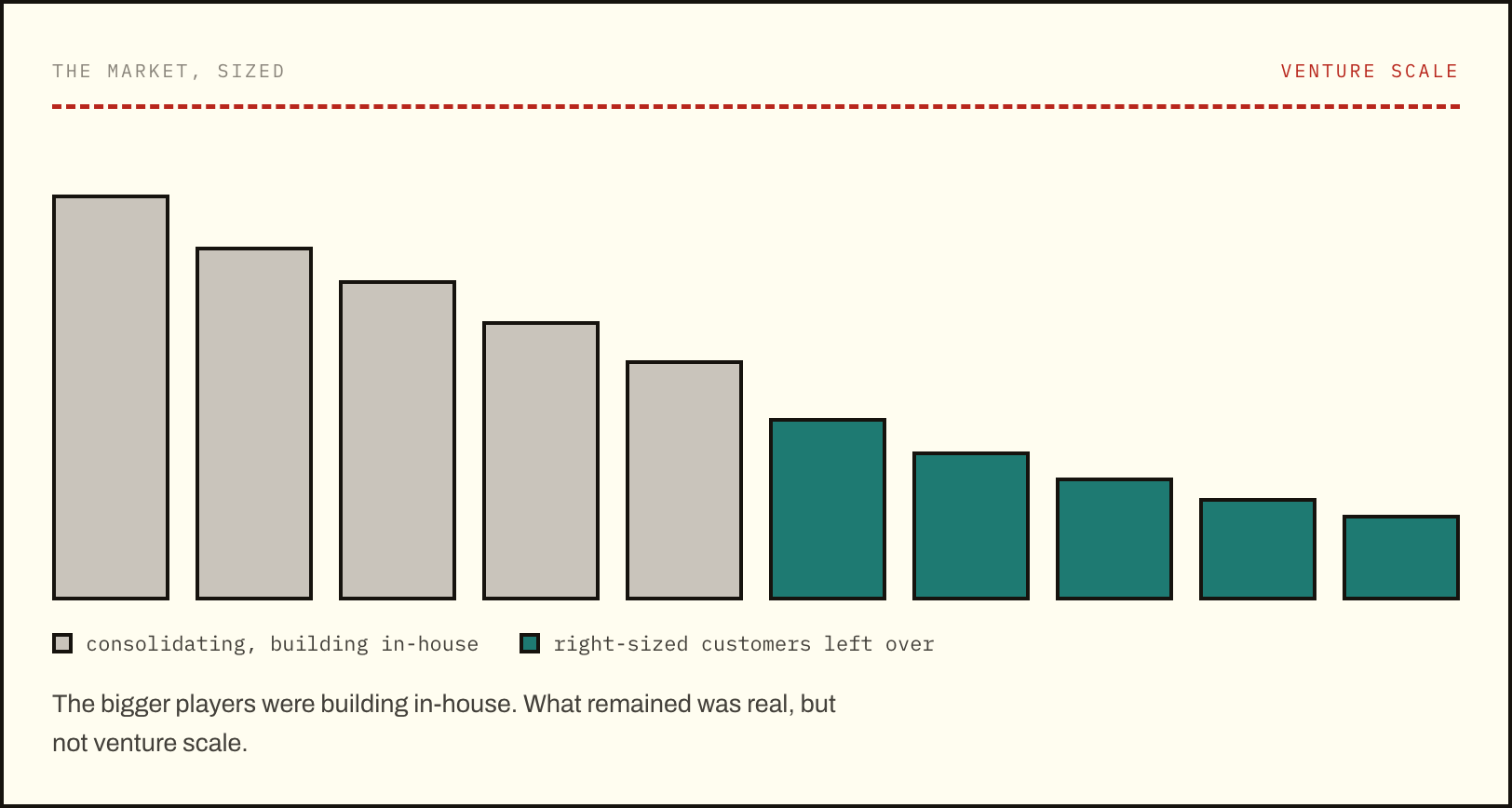
A market you have chosen is still a guess, so I built the research to test the bet properly. It came back against me. The market was consolidating, the bigger players were building their own tools in house, and the pool of right-sized customers left over was too small to carry a venture-scale company.
So I made the case against the direction I had sold weeks earlier. Not to abandon the market, the customers we had there stayed and mattered, but to stop treating it as the only bet. We re-pointed the effort before it burnt runway, and turned the same research engine onto the bigger question of where this company could actually win.
Finding the direction
The company needed a direction it could defend to investors. I built the programme that went and found it.
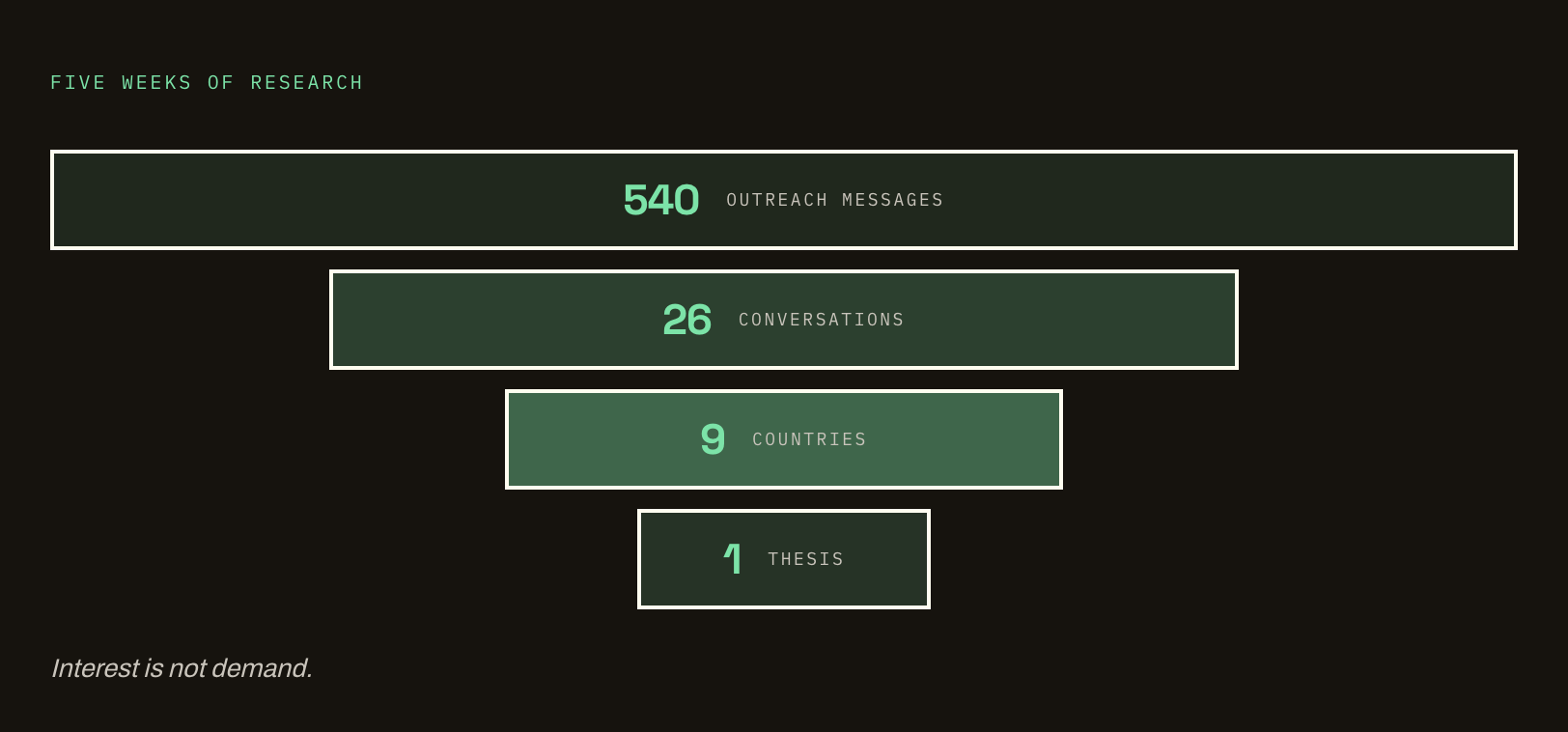
I pulled together a working group, the founders and the heads of marketing and procurement in it, and stood up a five-week research programme against an investor deadline. I wrote the discussion guides and ran the interviews, 540 outreach messages narrowed to 26 conversations across nine countries.
The standing rule was that interest is not demand, so every conversation got pushed to what someone would actually pay for and when. The rule held even when it flattered us. A buyer told us they would buy it tomorrow, and it still counted as one signal, not proof, because their own plans pointed the other way.
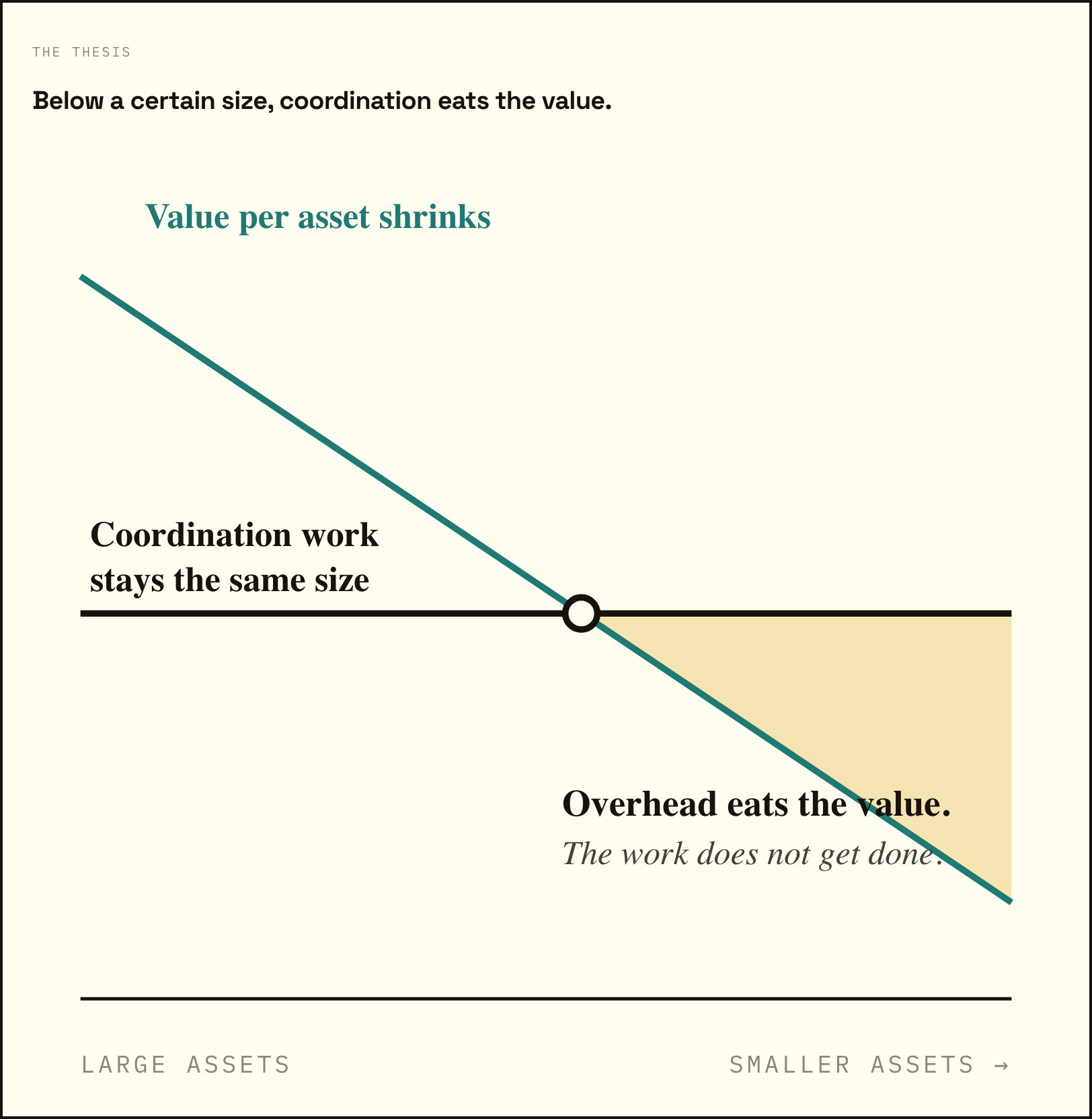
What came back was a thesis. The tools this industry runs on were built for a few large assets, coordinated by people on calls and in spreadsheets. As assets get smaller, which is the space we operate in, the coordination work stays the same size. So below a certain point the overhead eats the value and the work does not get done.
The thesis, and the customer it defines, became the company strategy. I wrote it, the founders made their adjustments and took it to the investors, who had been pushing for a clearer direction. They backed it.
Interest is not demand.
The rule that ran the whole programme.
The product strategy, in one shape
Strategy at company altitude does not tell a team what to build on Monday. This is the layer that does, and it is mine.
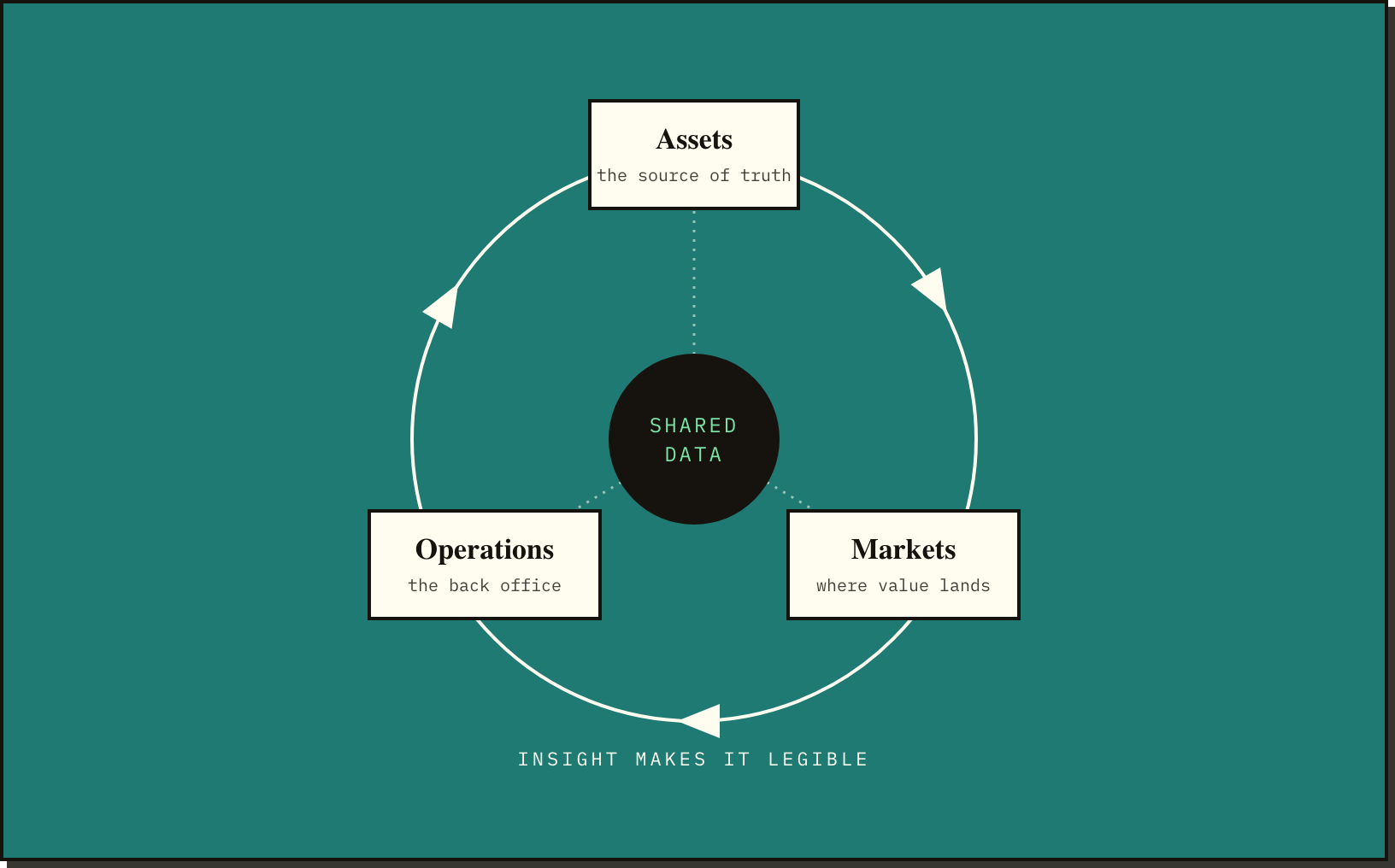
Underneath the company strategy I built the product strategy, and I reduced it to a single shape. One shared layer of data, the three stages of the operation it serves, and the insight on top that makes the whole thing legible. In our customers' worlds those stages run separately, every handover is manual, and the numbers degrade at each boundary. The shape is what joins them back up.
One object doing four jobs. My test for it is blunt. If you cannot sketch it in thirty seconds with a marker, it is not doing its job. And it gives the whole company something to say no with.
It did not stay a product artefact. Marketing writes positioning and messaging from the shape. Business development picks which customers to chase off the back of it, and I work that edge with them weekly, who is in, who is out, what we should charge. A forward-deployed engineering initiative rolled out from the same picture. The whole business runs from one page, and that page is the strategy.

The work customers point at
Strategy earns its keep when it ships. Alongside all of it, the team kept putting work in front of customers.
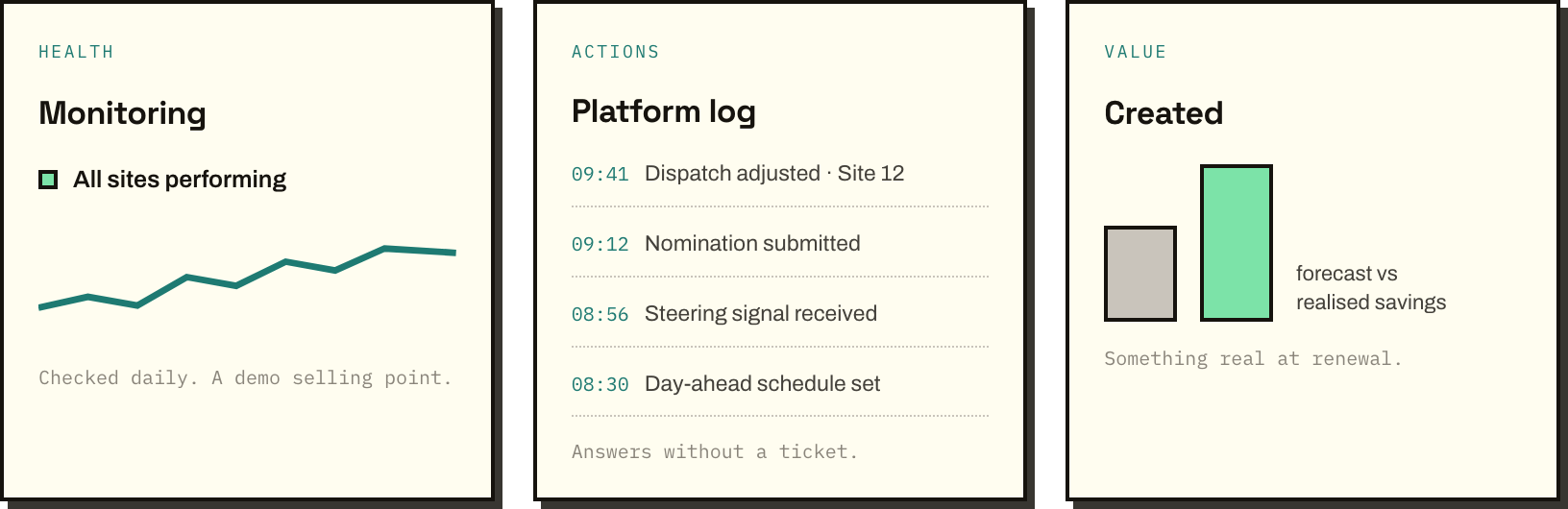
None of the strategy work meant the product stood still. The research had shown three insight layers missing from the platform, so we built all three. Health monitoring gives customers a live read on how their sites are performing. They check it daily, and it became a selling point in demos. Visibility of platform actions lets customers find answers on their own, and the support load dropped with it. The third surfaces the value the platform has created, something real to stand on at renewal.
One customer liked a demo enough to tell us to quote them on our own website. When we asked why they had chosen us, the answer was the visibility and control.
Something we've not had before.
More of what I built at Powernaut
How the team decides and ships.
None of it existed when I arrived, and it runs on one idea. Hand the team the problem, not the solution. Work starts from a short problem brief, and if the brief is long I have smuggled a solution into it. Product, engineering and delivery run as one team, and the bar at the far end is firm. Done means adopted, not deployed.
An AI-woven way of working.
AI runs through the day-to-day, the research, the design work and the routine operational load, so a small team moves like a bigger one. It is the medium I build in now, and the most energised I have felt about work in years.
The AI-native design system.
Design capacity was one external designer, about a day a week, and when we could not keep her I was not willing to lose the quality she brought. The design system is the answer, a single source of truth in the codebase with guardrails that keep AI-produced work on brand. It is why a team this size ships a coherent, considered product at the pace it does.
AI inside the product.
Most teams only answer the first AI question, how the team uses it to work. I owned the second, how it operates inside the platform. Customer first, visible, real product impact, and no slop, with agents inside the workflows rather than a chat bolted on top. The clearest bet was exposing the platform through an MCP server so agents can work directly against it. A light-touch build, but the pull from customers and the team was out of all proportion to its size.